Closing the gap between Catalog and Invoicing
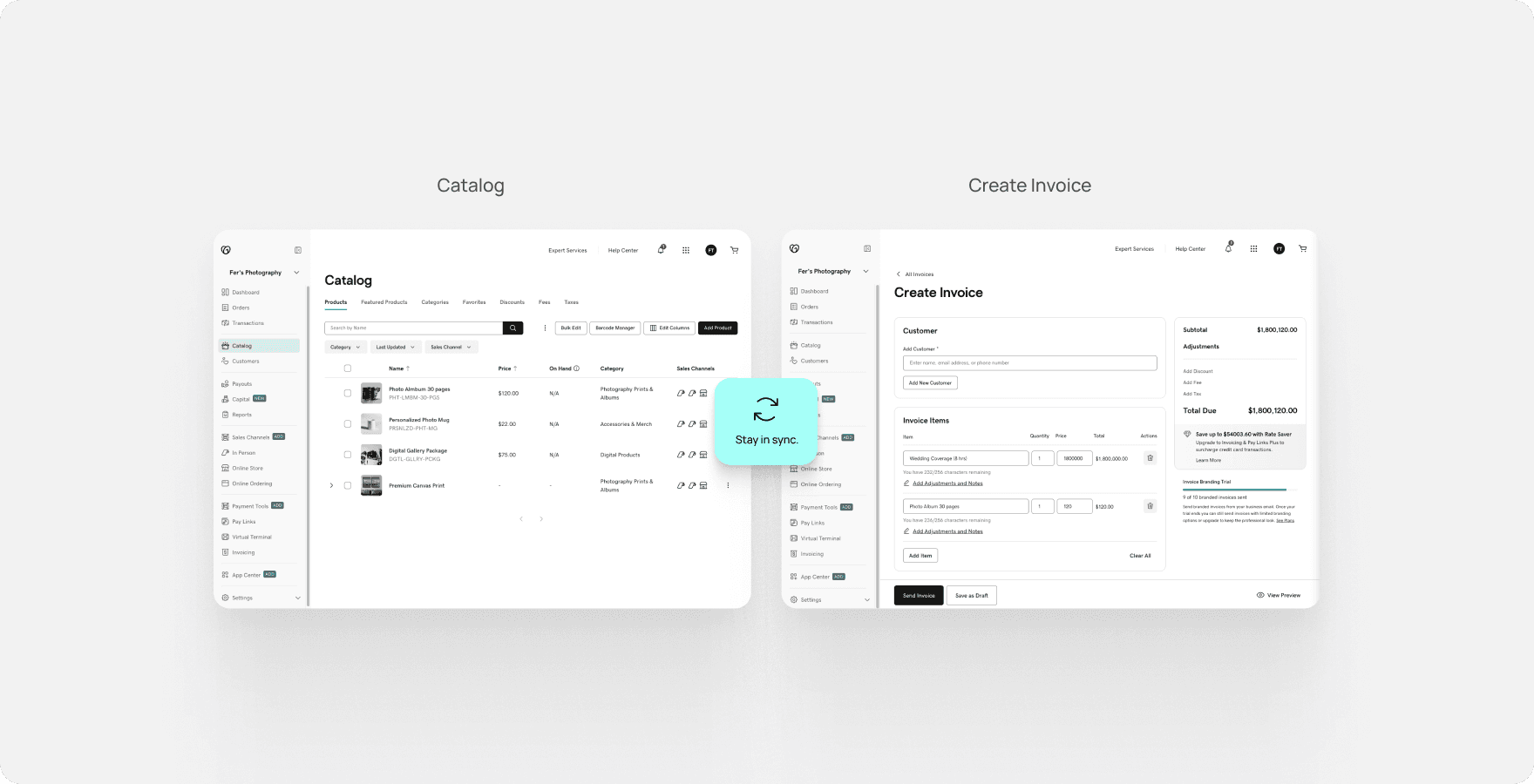
Overview —
Two product areas. One seamless flow.
The products were already there. The prices, taxes, images — all set up, all ready to go. They just lived in Catalog, completely invisible to Invoicing. Merchants had no choice but to start from scratch, every time. This is the story of how I closed that gap — and what it took to do it right.
Client —
GoDaddy · B2B SaaS
Industry —
Technology
Role —
Product Designer
Timeline —
3 months · 2026


The problem —
Merchants were rebuilding the same invoice from scratch. Every. Single. Time.
When creating invoices on this high-scale commerce platform, merchants had to manually re-enter products, prices, and taxes, even for items already set up in Catalog. Repetitive, slow, and error-prone. The data existed. The connection didn't.
The Approach —
Research first. Decisions documented. Nothing left to chance.
🎤 User Interviews
User Interviews revealed that power users with large catalogs were the most frustrated — spending significant time on entry that felt completely unnecessary.
Position #2
Position #3
Position #4
Position #5
Position #6
📊 Data Analysis
Data Analysis confirmed it: a meaningful portion of active Catalog users on the platform weren't using those items in Invoicing. The integration wasn't just wanted — it was expected.
Position #2
Position #3
Position #4
Position #5
Position #6
🔍 Competitive Research
Competitive Research helped identify familiar interaction patterns around search behavior, item types, and editing flexibility.
Position #2
Position #3
Position #4
Position #5
Position #6
📐 Trade-off Documentation
Trade-off Documentation kept every major decision transparent — options explored, pros and cons, final call, and what still needed validation. It kept Product and Engineering aligned and became a format the team adopted beyond this project.
Position #2
Position #3
Position #4
Position #5
Position #6
The Solution —
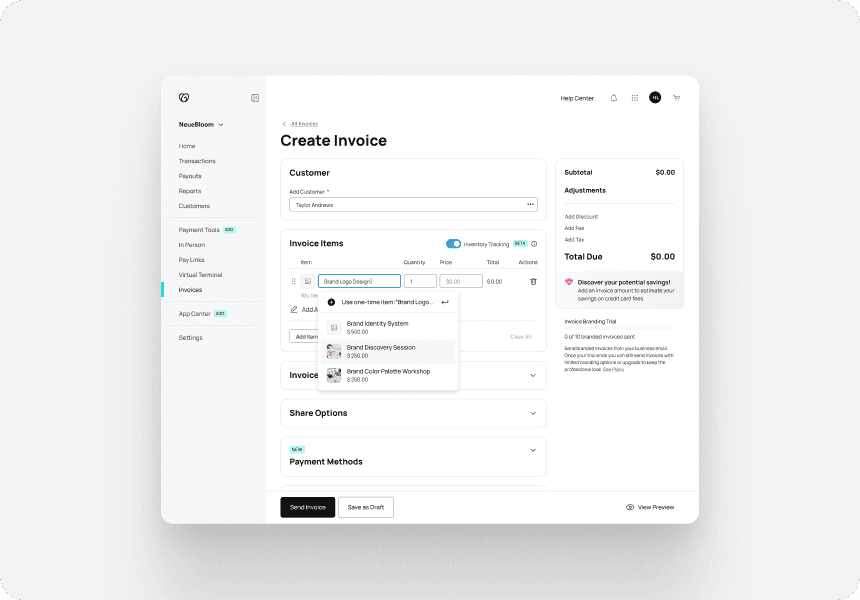
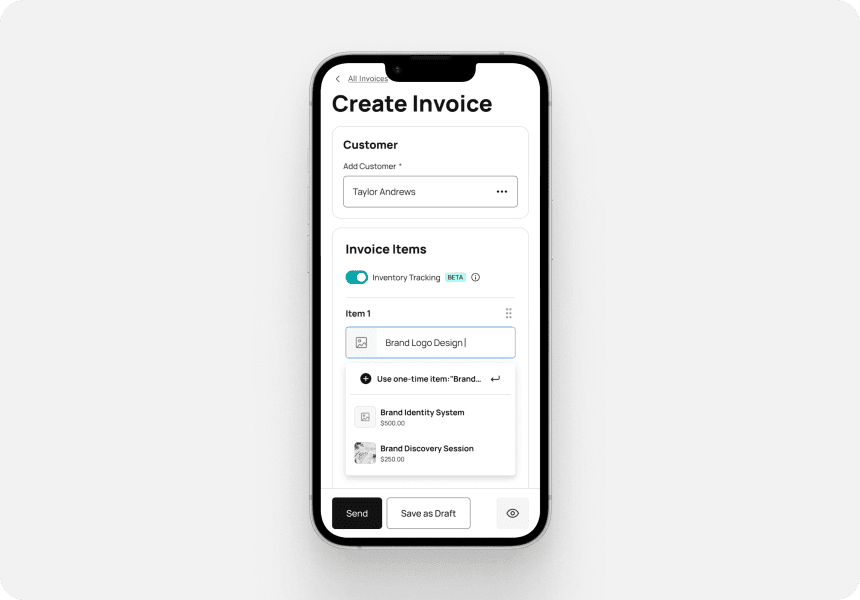
Pull from Catalog. Skip the repetition. Stay in sync.
Beta rollout with user control
An onboarding modal for first-time users and a toggle to revert, giving us a real feedback loop without risking the full user base.
Flexible item types
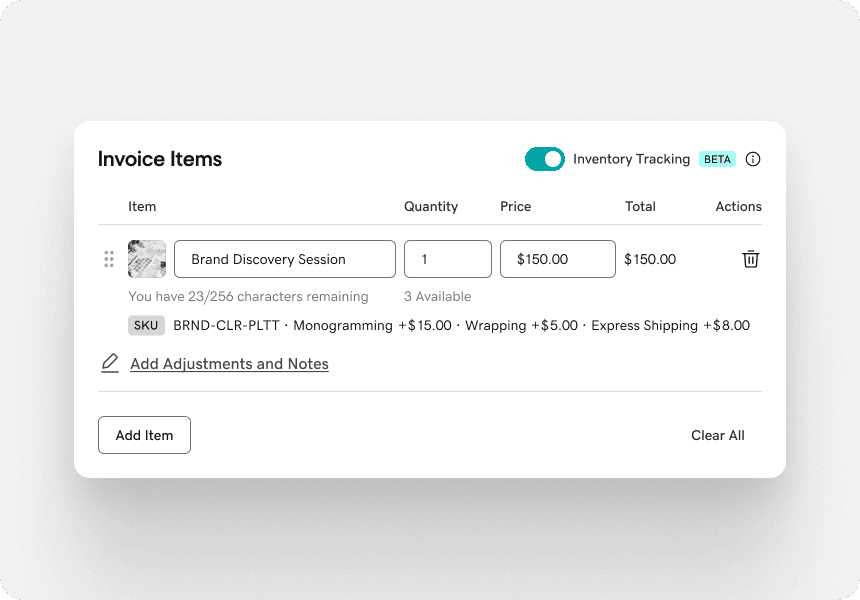
Catalog items pull in pre-configured details; new entries become one-time items. One interaction, two workflows.
Smarter defaults
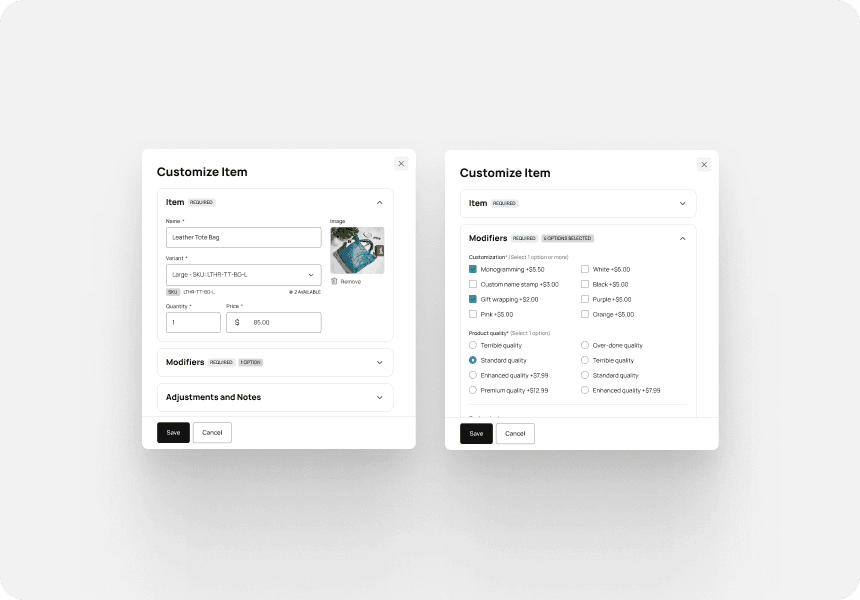
Name, price, image, and taxes pre-filled on selection. Variants and modifiers guided to reduce errors. Edits stay local to the invoice, never touching the original product.
Design system alignment
Text labels over chips, checkboxes for modifiers, reused Edit Item modal. Every decision balanced UX, consistency, and dev effort.
The Impact —
Launched on a platform used by millions of small business merchants worldwide.
Feature adoption 📈
Grew significantly following launch, with merchants actively pulling Catalog items into invoices from day one.
Invoice creation time dropped ⚡
As merchants moved from manual re-entry to selecting pre-configured items in just a few clicks.
User satisfaction improved post-launch 😊
Reflected in positive merchant feedback from users who had been requesting this integration.